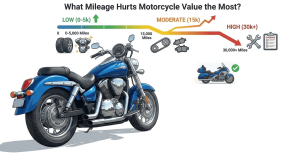
If you are planning to sell or trade in your motorcycle, mileage is one of the first things buyers and appraisers look at. So, what mileage actually hurts your bike’s value the most?
In general, motorcycle value starts taking a more noticeable hit after 15,000 miles, and the drop becomes steeper after 30,000 miles, especially for sport bikes and poorly documented motorcycles.
While there is no magical number where a bike suddenly loses all of its value, what matters most is how that mileage compares to the bike’s age, engine size, category, condition, service history, and overall market demand. A well-maintained motorcycle with higher mileage can still hold strong value, while a lower-mileage bike with poor upkeep, cosmetic damage, or long periods of neglect can be worth less than expected.
For riders in Florida, mileage matters even more when combined with heat, humidity, coastal air, and year-round riding conditions. That is why understanding how mileage affects value can help you make smarter decisions before you sell.
Quick Takeaways
- The Tipping Points: Value typically takes a noticeable hit after 15,000 miles and drops more steeply after 30,000 miles.
- Under 5,000 miles: Often viewed as low mileage on many motorcycles and can help support premium resale value.
- 5,000 to 15,000 miles: Usually considered normal and does not automatically hurt value if the bike is clean and well-maintained.
- The Big Picture: Mileage alone does not determine value. Maintenance history, tires, chain condition, accident history, modifications, engine displacement, and local demand all matter.
- The Florida Factor: Florida motorcycles may show more wear for their mileage because they are often ridden year-round and exposed to heat, rain, and salt air.
The Motorcycle Mileage Cheat Sheet
| Mileage Range | Market Perception | Value Impact | Key Buyer Focus |
| 0 – 5,000 | Low / Lightly Used | Premium pricing | Cosmetic condition, battery health, stale fuel |
| 5,000 – 15,000 | Normal / Healthy | Neutral (expected wear) | Routine maintenance logs, tire tread, clean starts |
| 15,000 – 30,000 | Moderate / Getting High | Noticeable depreciation | Major service records (valve clearance), chain/sprockets |
| 30,000+ | High Mileage | Heavy depreciation | Type of bike (Touring vs. Sport), verifiable service history |
Does High Mileage Always Hurt Motorcycle Value?
Not always. High mileage becomes a bigger issue when it raises concern about future repairs, worn components, or lack of maintenance. Buyers want confidence that the motorcycle has been cared for. If your bike has higher mileage but also has service records, a clean title, good tires, and no major mechanical issues, it may still appraise better than a neglected lower-mileage unit.
A few examples of how mileage nuance works:
- Maintenance beats mileage: A 12,000-mile cruiser with full service history may hold value better than a 4,000-mile bike that sat unused for years and now has fuel system issues.
- Displacement matters: A 25,000-mile, large-displacement touring bike (like an 1800cc Goldwing) will not raise as much concern as a 25,000-mile, high-revving 600cc supersport. Larger engines generally handle high mileage with less wear.
- Storage beats stats: A Florida bike used for regular highway riding and stored in a garage may present much better than a bike with lower mileage that was stored outdoors near the coast.
Mileage Ranges and How Buyers Usually View Them
Under 5,000 Miles
This is the range many buyers see as low mileage, especially on newer motorcycles. Bikes in this category often attract more attention because they appear lightly used.
- How it affects value: Often supports premium resale pricing, appeals highly to private buyers and dealers, and is especially valuable on sport bikes.
- What can still hurt value: Dry-rotted tires, a weak battery, fuel issues from sitting too long, cosmetic damage, or cheap aftermarket parts.
5,000 to 15,000 Miles
For many used motorcycles, this is a healthy and expected range. Buyers often consider this normal usage, especially if the bike is a few years old.
- How it affects value: Usually does not hurt value much by itself. It is viewed as a solid balance between use and remaining life.
- Value tips in this range: Keep receipts for oil changes and service, replace worn tires before appraisal if needed, ensure the bike starts cleanly, and clean up any corrosion.
15,000 to 30,000 Miles
This is often the range where mileage starts to affect value more noticeably. Buyers begin asking more questions about maintenance and future reliability.
- How it affects value: Can lower value compared with similar lower-mileage listings. Service history and wear items become a major part of the value conversation.
- Buyers start checking for: Chain and sprocket wear, brake pad and rotor condition, suspension wear, tire age, valve service history, and signs of leaks.
Over 30,000 Miles
At this point, value often depends heavily on bike type, engine size, and ownership history. Some motorcycles handle high mileage very well, but many buyers still expect a discount.
- How it affects value: More noticeable depreciation and a smaller buyer pool. Dealers may be more conservative on trade-in value.
- When it hurts the most: The bike is a supersport, there are no service records, the title history is unclear, major services are overdue, or the bike has poor modifications.
Which Types of Motorcycles Are Hurt Most by High Mileage?
Mileage does not affect every motorcycle the same way.
- Sport Bikes: Sport bikes often lose value faster at higher mileage because buyers may assume aggressive riding, track use, or harder wear on the engine, clutch, suspension, and brakes. Missing records or fairing damage compounds this drop.
- Cruisers: Cruisers can often tolerate mileage better in the eyes of buyers, especially if they were used for steady road riding. A clean, well-maintained cruiser with moderate mileage may still hold solid value.
- Touring Bikes: Touring motorcycles are expected to accumulate miles. A higher-mileage touring bike is not always a red flag if it has been maintained properly. Buyers in this segment often care more about reliability, comfort, and service history than the odometer alone.
- Adventure Bikes and Dual Sports: These can be a mixed case. Some buyers expect them to be used, but off-road wear, cosmetic scratches, and hard use can magnify the effect of higher mileage.
- Dirt Bikes: Hours often matter more than mileage on dirt bikes, but if a street-legal dual sport has high mileage, buyers will look closely at overall wear and abuse.
What Mileage Hurts Motorcycle Value the Most in Florida?
In Florida, mileage becomes more damaging when it is paired with environmental wear. Because bikes here can be ridden year-round, odometer readings can climb faster than in seasonal markets. That alone is not the problem. The concern is what those miles came with.
Florida buyers and appraisers often watch for:
- Salt-air corrosion on coastal bikes
- Sun fading on paint, seats, and plastics
- Humidity-related issues with electronics or storage
- Rust on chains, bolts, and hardware
- Tire aging from heat exposure
- Long-term outdoor storage
Pro Tip for Florida Riders: If you ride near the Florida coast, regularly wiping down your forks and using an anti-corrosion spray (like ACF-50) on metal hardware can save you hundreds of dollars in lost appraisal value.
That means a 20,000-mile Florida motorcycle with clean maintenance records, indoor storage, and strong cosmetic condition may appraise better than a 12,000-mile bike with corrosion and neglect.
Why Service History Can Matter More Than Mileage
Mileage tells part of the story. Maintenance tells the rest. A buyer or appraiser is more likely to feel comfortable with a higher-mileage bike if they can see that the owner stayed on top of:
- Routine fluids: Oil, coolant, and brake fluid changes
- Drivetrain: Chain maintenance and sprockets
- Wear items: Tire replacement, brake pads, and battery health
- Major intervals: Scheduled major services (like valve clearances) and factory recalls
If your motorcycle has higher mileage, records can help protect its value. Without records, buyers often assume the worst and lower their offers accordingly.
How to Protect Your Motorcycle’s Value Even With Higher Mileage
If your bike already has moderate or high mileage, you can still improve how it appraises.
- Keep it clean and presentable: A clean bike suggests responsible ownership. Wash it, remove oxidation, and fix small cosmetic issues where practical.
- Gather your maintenance records: Receipts, service logs, and records of recent repairs make a real difference during appraisal.
- Address obvious wear items: Worn tires, weak brakes, rough chains, or fluid leaks drag value down fast.
- Avoid questionable modifications: Poorly installed aftermarket parts, loud exhausts without supporting tunes, and missing factory components hurt value.
- Use a Pre-Appraisal Checklist: Locate your spare keys and clean title, put all service receipts in a single folder, and give the bike a thorough wash and chain lube before having it looked at.
The Best Way to Know What Your Motorcycle Is Really Worth
Online estimates can only go so far. While tools like Kelley Blue Book (KBB) and J.D. Power (formerly NADA) provide a decent national baseline, they simply cannot factor in the details that change real-world value.
Automated calculators miss Florida’s coastal salt air impact, the premium value of your specific aftermarket exhaust, local seasonal demand, and true mechanical condition. That is why a real, in-person appraisal gives you a much more accurate and useful number than a generic pricing tool.
FAQs
What mileage is considered high for a motorcycle?
It depends on the type of motorcycle. For many street bikes, 20,000 to 30,000 miles starts to feel high to buyers. For touring bikes, that number may be less concerning. For sport bikes, buyers often get more cautious sooner.
Does mileage matter more than age?
Not always. A motorcycle’s age, storage history, and maintenance can matter just as much. A low-mileage older bike that sat unused for years can have more issues than a newer, higher-mileage bike that was maintained properly.
Do motorcycles lose value after 10,000 miles?
Not automatically. Many motorcycles still hold value well at 10,000 miles if they are clean, properly serviced, and in good mechanical condition.
Does high mileage matter less on Harley or touring bikes?
In many cases, yes. Buyers often expect cruisers and touring bikes to accumulate miles through regular road use. Condition and maintenance still matter, but mileage may not hurt them as quickly as it does a supersport.
Will dealers lower trade-in value for mileage?
Yes, especially when mileage is high for the bike’s year or type. Dealers also consider reconditioning costs, local resale demand, and whether the motorcycle fits their inventory needs.
How does Florida weather affect motorcycle value?
Florida heat, humidity, rain, and salt air can increase wear on paint, tires, seats, chains, fasteners, and electronics. Appraisers often consider these factors along with mileage.
Final Thoughts
So, what mileage hurts motorcycle value the most?
In general, the 15,000-mile mark is where value starts dropping more noticeably, and the hit becomes much steeper after 30,000 miles. At these milestones, buyers expect more wear, more service, and more risk—especially on sport bikes.
But mileage is only one part of the equation. A clean, well-kept motorcycle with documented maintenance can outperform a lower-mileage bike that has been neglected.
If you want to know what your motorcycle is worth in the real Florida market, a personalized appraisal is the best place to start.
Book Your Mobile Appraisal Today
Appraise My Bike provides mobile motorcycle appraisals across Florida, making it easier to understand your bike’s real value without relying on guesswork. Whether you are selling, trading, settling an estate, or just want an accurate number, we can help.
Book your mobile appraisal today and get a professional opinion based on your motorcycle’s actual condition, mileage, and Florida market value.